
Our Services
Key Components of Industrial Design Management
01
Software Solutions
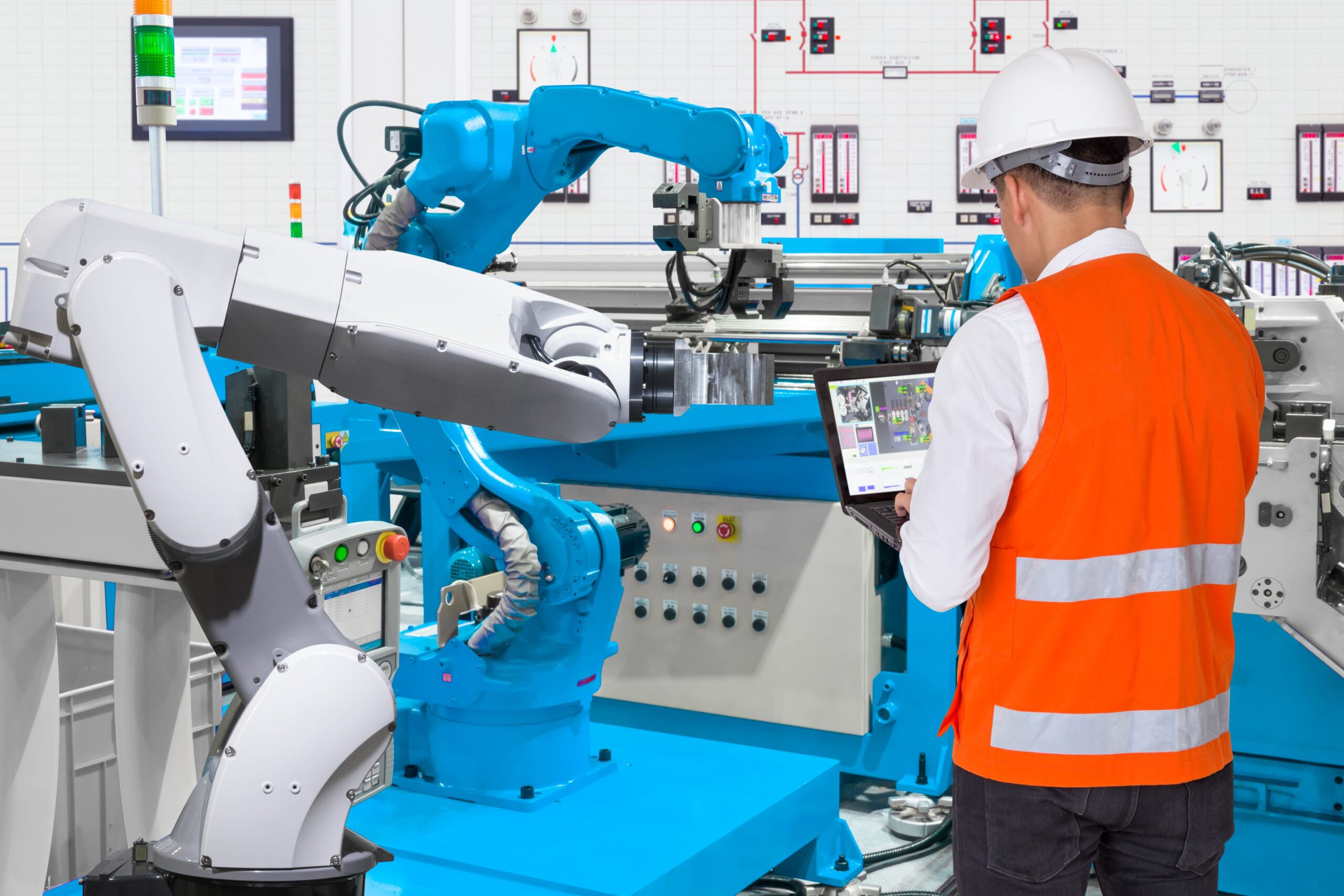
Using our software solutions, you enter an environment where the real world is replaced by virtual and data models that guide you on the path of digital transformation.
Among other things, enables the creation of new as well as the reworking of existing logistics, production and warehouse systems, effective planning, capacity verification of the production volume, or balancing of the production process. In addition, by using a digital twin along with Real-Time Location System (RTLS) technology, you are able to locate the indoor monitored objects in real time.
02
Process Simulation
Dynamic computer simulation before the actual implementation verifies how the system of production and logistics processes will work after its implementation, or when implementing changes such as expansion of the production portfolio or change in production volume. It is also crucial for process automation, if you are looking for bottlenecks in processes and want to optimize them, or if you need to simulate a greenfield production plant.
03
Industrial Ergonomics
PO Management provides comprehensive services in the field of ergonomics based on many years of experience with the implementation of a number of commercial and research projects using the most modern tools of contemporary ergonomics. We provide design of workplace ergonomics and evaluation of physical load on employees. We implement a functional and comprehensive ergonomics evaluation system as well as training of company employees in the field of industrial ergonomics.
01
Strategic Planning
Industrial design management begins with strategic planning, where goals, objectives, and design requirements are defined. This phase involves conducting market research, analyzing user needs and preferences, and identifying emerging trends to inform the design direction.
02
Cross-functional Collaboration
Effective industrial design management requires seamless collaboration between various stakeholders, including designers, engineers, marketers, and executives. By fostering an interdisciplinary approach, teams can leverage diverse perspectives and expertise to develop innovative solutions that address complex challenges.
03
Design Process Optimization
Streamlining the design process is essential for maximizing efficiency and minimizing time-to-market. Industrial design managers utilize tools and methodologies such as design thinking, rapid prototyping, and iterative testing to iterate on concepts, gather feedback, and refine designs iteratively.
01
Resource Allocationnt
Managing resources effectively is crucial for successful industrial design projects. Industrial design managers allocate budgets, manpower, and time resources strategically to ensure that projects are completed within scope, schedule, and budget constraints.